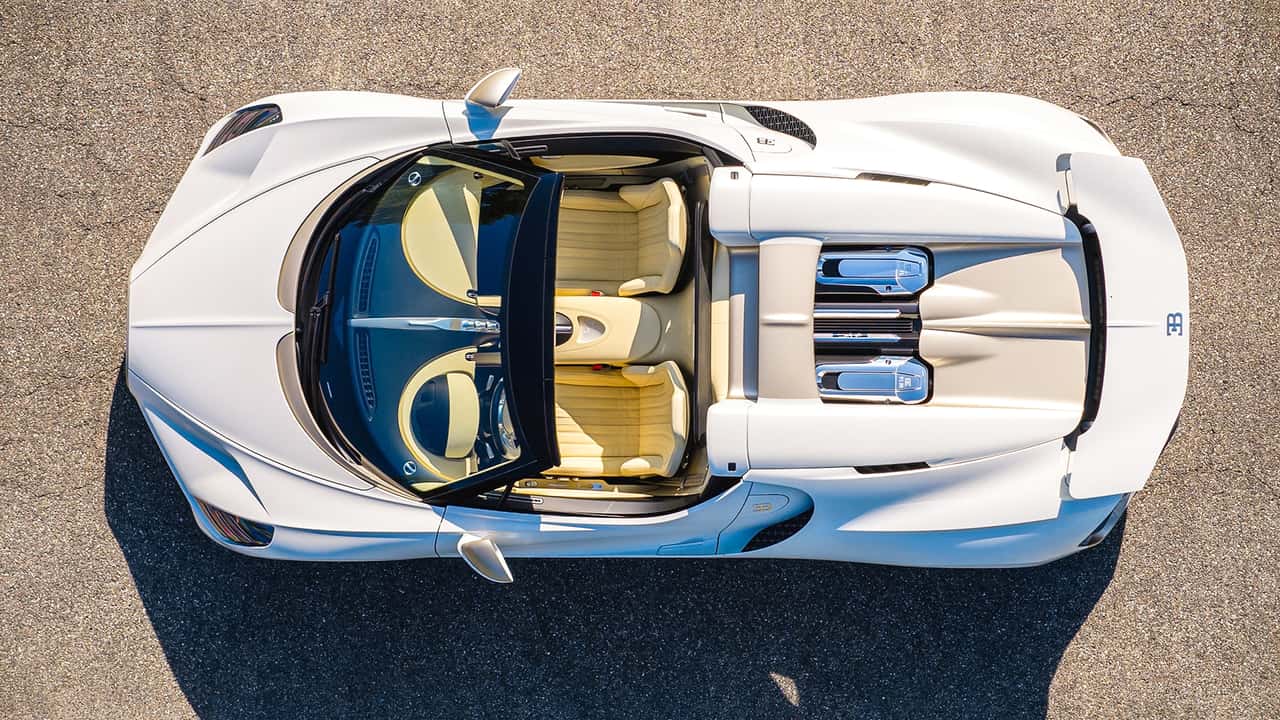
Bugatti Unveils W16 Mistral: The Grand Finale of an Unforgettable Era
Article summary
The automotive world holds its breath as Bugatti pulls back the silk on what is arguably its most significant creation in recent memory: the W16 Mistral. More than just another hypercar, the Mistral is a profound statement, a magnificent valediction to an engine that has defined an entire epoch of automotive performance – the mighty 8.0-liter quad-turbo W16. For twenty years, this engineering titan has powered the world's fastest, most luxurious, and utterly uncompromising machines, from the groundbreaking Veyron to the record-shattering Chiron. Now, as the Mistral takes its final bow, it signals the definitive end of an era, a poignant farewell to a pure combustion symphony before Bugatti pivots to a new, electrified future.
At its heart lies the W16, an engine unlike any other. Conceived in the early 2000s under the Volkswagen Group's audacious vision to resurrect Bugatti, it was a declaration of intent. Eight liters of displacement, sixteen cylinders arranged in a unique 'W' configuration (essentially two narrow-angle V8s sharing a common crankshaft), force-fed by four turbochargers, culminating in an awe-inspiring 1,600 horsepower in its ultimate form, as seen in the Chiron Super Sport 300+ and now the Mistral. This powerplant isn't merely about brute force; it's a masterpiece of thermal management, lubrication, and electronic control, capable of propelling vehicles to speeds well over 400 km/h with an intoxicating blend of ferocity and refinement that has become Bugatti's hallmark. The sheer mechanical complexity and exquisite craftsmanship involved in producing each W16 engine are legendary, making it a true icon of internal combustion.
The Mistral itself is a breathtaking open-top roadster, designed to encapsulate the W16's raw power and the romance of open-air motoring. Drawing inspiration from Bugatti's rich heritage of elegant roadsters, it blends the aggressive aerodynamics required for extreme speeds with the sculpted beauty expected of Molsheim. Every line, every vent, every surface is meticulously crafted not just for visual drama, but to manage airflow, cool the colossal engine, and provide downforce. Its design language subtly references past Bugatti masterpieces while forging a path forward, creating a truly unique aesthetic that is both timeless and cutting-edge. The choice of a roadster for the W16's swansong is particularly fitting, allowing occupants an unfiltered auditory experience of that magnificent engine's roar and howl.
The market implications of the Mistral are as monumental as its performance. With an expected production run of just 99 units and a price tag firmly in the multi-million-dollar territory, each Mistral is an instant collector's item, an automotive investment whose value is almost guaranteed to appreciate. This isn't just a car; it's a piece of history, a tangible representation of the zenith of pure combustion hypercar engineering. For the ultra-wealthy clientele, acquiring a Mistral signifies not only unparalleled taste but also an appreciation for the mechanical artistry that will soon be relegated to the annals of automotive history. It underscores Bugatti's unique position at the apex of the automotive pyramid, where exclusivity and performance converge into pure art.
Looking back, Bugatti has always been synonymous with pushing the boundaries of what's possible, from Ettore Bugatti's revolutionary Type 35 race cars to the opulent Royale. The W16 engine, first introduced in the Veyron, continued this legacy, resetting benchmarks for speed, luxury, and engineering ambition. It dared to exist in an era increasingly focused on efficiency and smaller displacements, standing as a defiant monument to excess and ultimate performance. The Mistral, therefore, isn't just the end of an engine; it's the closing chapter of a bold philosophy that prioritized unadulterated power and mechanical grandeur above all else.
As the roar of the W16 fades into legend, Bugatti stands on the precipice of its next grand chapter under the stewardship of Bugatti Rimac. The future promises a new V16 engine, likely incorporating groundbreaking hybrid technology, marrying Bugatti's traditional values of exquisite craftsmanship and unparalleled performance with the undeniable imperatives of electrification. While the pure, unassisted thunder of the W16 will be sorely missed, the transition marks an exciting evolution, ensuring Bugatti continues its relentless pursuit of automotive perfection. The Mistral is more than a car; it's a monument to an era, a final, glorious symphony played by sixteen cylinders, leaving an indelible mark on the automotive landscape.
OBD2HQ context
This article helps vehicle owners track changes that may affect maintenance cost, safety technology, service access and resale value. It is not a diagnostic procedure; if you have a warning light or symptom, open the matching OBD2 code, vehicle profile or car problem finder.