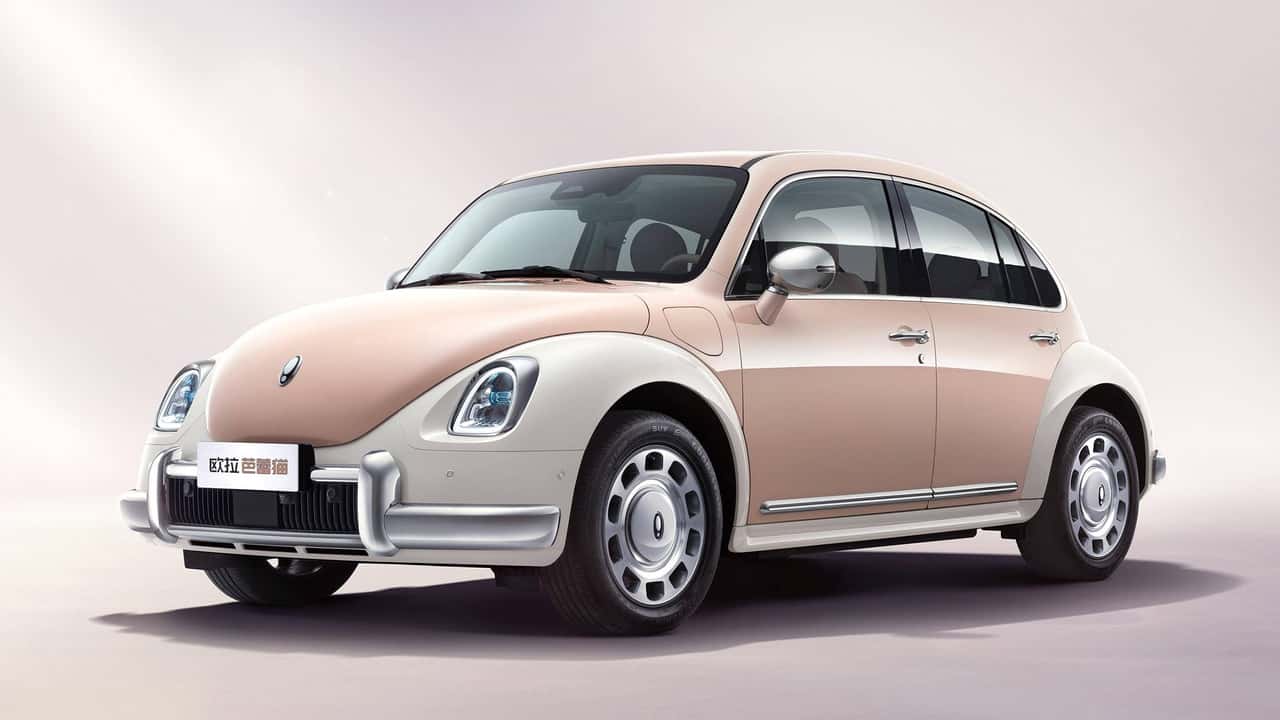
The Curious Case of the Ora Ballet Cat: China's Electric Beetle Homage Gets a Potent Upgrade
Article summary
In the ever-evolving tapestry of automotive design, few cars spark as much immediate recognition and debate as the Ora Ballet Cat. Hailing from China's Great Wall Motor (GWM) stable, this all-electric compact car has, from its very inception, been a bold, unashamed homage to one of history's most beloved automotive icons: the Volkswagen Beetle. Its flowing lines, bulbous fenders, and distinct silhouette are unmistakable, prompting smiles, head-scratching, and more than a few raised eyebrows across the industry. But this isn't just a story about design mimicry; it's about evolution. News has just broken that the Ballet Cat is stepping up its game, receiving a significant powertrain refresh that promises to make this quirky electric offering even more compelling.
To truly appreciate the Ballet Cat, one must first acknowledge the colossal shadow cast by the original Volkswagen Beetle. Ferdinand Porsche's "people's car" transcended mere transportation to become a cultural phenomenon, a symbol of resilience, simplicity, and counter-culture. Its distinctive, timeless design, born of functional requirements and aerodynamic principles, remains instantly recognizable globally. The Ora Ballet Cat doesn't merely borrow from this legacy; it attempts to reimagine it for the electric age, with a distinctly modern, albeit retro-inspired, twist. Marketed heavily towards women in China, its interior often features pastel hues, vanity mirrors, and even a "warm man mode" for comfort, indicating a clear, targeted demographic that values aesthetics and user-friendly features as much as, if not more than, raw performance.
The most exciting development for the Ballet Cat is undoubtedly its enhanced propulsion system. While precise specifications can vary by market and trim, the latest iteration is expected to feature a more advanced electric motor and a larger, more energy-dense battery pack. Previous models typically offered a single 171 hp (126 kW) electric motor and a range of around 401 to 500 km (249 to 311 miles) on the CLTC cycle, drawing power from 49.9 kWh or 60.5 kWh LFP battery packs. The new upgrade is rumored to push these figures, potentially offering a slightly more potent motor output, but more crucially, an extended range closer to the 500-550 km mark, thanks to optimized battery management systems and potentially even higher capacity cells. This translates to greater practicality for urban and suburban dwellers, mitigating range anxiety and making daily commutes or weekend excursions considerably more comfortable and efficient.
Ora, a sub-brand of Great Wall Motor, has carved out a niche for itself by focusing exclusively on electric vehicles with distinctive, often retro-inspired designs and a strong emphasis on lifestyle. The Ballet Cat fits perfectly into this strategy, acting as a halo car that generates significant buzz. In the hyper-competitive Chinese EV market, standing out is paramount. While some might view its Beetle-esque appearance as derivative, it undeniably captures attention and evokes a sense of nostalgia that resonates with a segment of buyers. Its positioning as a stylish, safe, and technologically equipped urban cruiser, often highlighting features like advanced driver-assistance systems and smart connectivity, allows it to compete effectively against other compact EVs, offering a unique blend of vintage charm and modern practicality.
The visual similarities between the Ora Ballet Cat and the Volkswagen Beetle are impossible to ignore, inevitably sparking debates about intellectual property and design originality. While Volkswagen has historically taken a firm stance against imitations, the specific legal complexities of design patents and copyright across international borders, especially concerning a car that ceased production years ago, make this a nuanced issue. Is the Ballet Cat a respectful homage, celebrating an iconic design for a new electric era, or a blatant copy leveraging established aesthetics without true innovation? This question lies at the heart of its identity. Regardless of one's stance, the Ballet Cat serves as a fascinating case study in how global automotive design influences, inspires, and occasionally clashes in an increasingly interconnected world.
With its latest powertrain enhancements, the Ora Ballet Cat solidifies its position as more than just a novelty; it's an increasingly capable and practical electric vehicle that deliberately plays on powerful emotional connections to automotive history. It represents a fascinating intersection of retro appeal, modern EV technology, and assertive Chinese manufacturing. As Ora continues to refine its offerings and potentially eye international markets, the Ballet Cat will undoubtedly remain a talking point, challenging perceptions of originality and demonstrating how a familiar form can be infused with new, electrified life. Whether you see it as a charming tribute or a contentious clone, one thing is certain: the Ballet Cat is undeniably making waves, and now, it's doing so with even more electric zest.
OBD2HQ context
This article helps vehicle owners track changes that may affect maintenance cost, safety technology, service access and resale value. It is not a diagnostic procedure; if you have a warning light or symptom, open the matching OBD2 code, vehicle profile or car problem finder.