Article summary
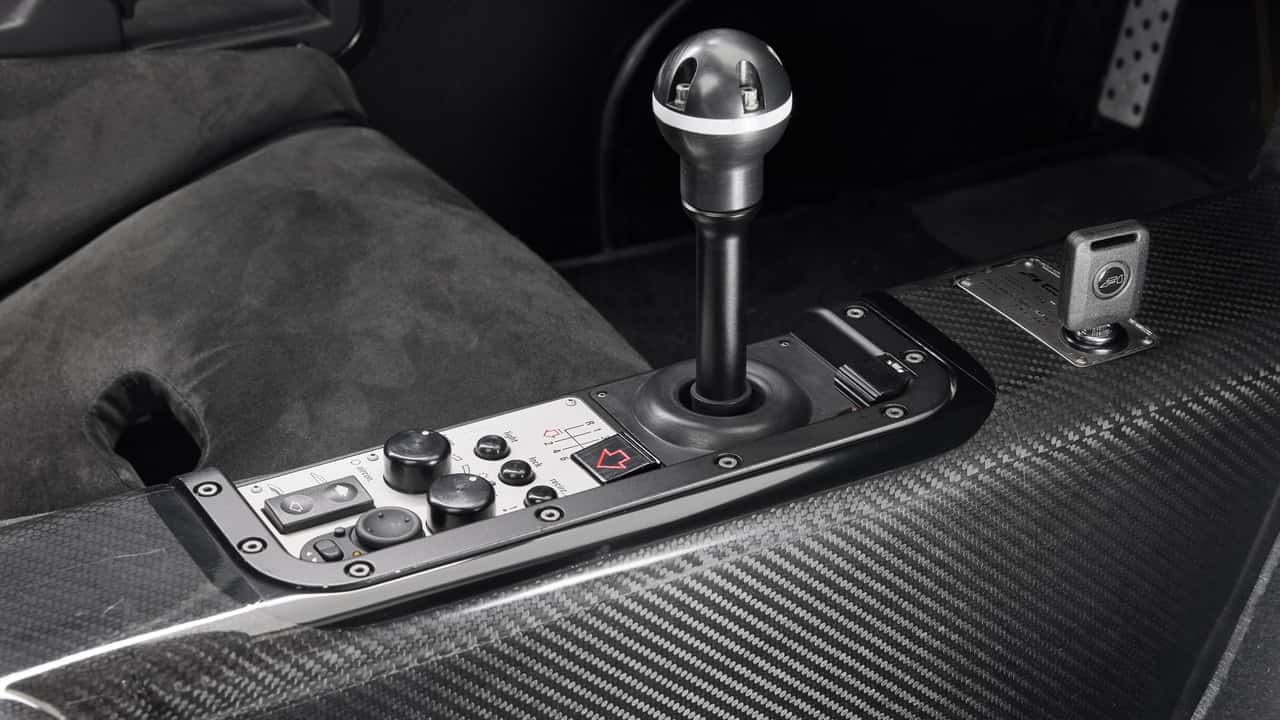
In the often-predictable world of supercars, where horsepower figures relentlessly climb and dual-clutch transmissions reign supreme, a whisper has emerged from the hallowed halls of Woking that has sent seismic tremors through the enthusiast community: McLaren, the purveyor of some of the most technologically advanced and blisteringly fast machines on the planet, might be bringing back the manual gearbox. For nearly three decades, McLaren road cars have been exclusively automatic, a testament to their relentless pursuit of speed and track performance. The mere suggestion of a three-pedal setup from the brand that gave us the P1 and Senna is enough to make any petrolhead's heart skip a beat, immediately invoking the legendary ghost of the F1.
The McLaren F1, unveiled in 1992, wasn't just a supercar; it was a paradigm shift. And at its core, connecting that magnificent BMW-sourced V12 to the asphalt, was a bespoke six-speed manual transmission. It was a car designed for ultimate driver immersion, a philosophy that a manual gearbox perfectly encapsulated. However, as the 21st century dawned, McLaren, like many of its peers, embraced the march of technology. Sequential manual gearboxes, derived from Formula 1, offered faster shifts, eliminating human error and shaving precious tenths off lap times. This swiftly evolved into the ubiquitous dual-clutch transmission (DCT) – a marvel of engineering that blends lightning-fast shifts with uncanny smoothness, becoming the default choice for any manufacturer aiming for peak performance and refinement. McLaren's journey from the F1's manual to the seamless shifts of today's 720S or Artura has been a clear, linear path towards absolute speed.
Yet, a counter-current has been gaining strength in the high-performance segment. While DCTs offer unparalleled speed, they sometimes dilute the raw, tactile connection between car and driver. Brands like Porsche, with its GT cars, and Aston Martin, with certain special editions, have shrewdly tapped into this desire for engagement, offering manual options to critical acclaim. This isn't about outright pace anymore; it's about the experience, the ritual of heel-and-toe, the satisfaction of perfectly timed shifts, and the feeling of truly being in control. If McLaren were to reintroduce a manual, it wouldn't be to make their cars faster – that battle is already won by their DCTs. Instead, it would be a profound statement, an acknowledgment of the purist's yearning for a more analogue, visceral driving experience in an increasingly digital world. The technical challenge would be immense, integrating a manual with modern engine management systems and immense power outputs without compromising reliability or the McLaren driving dynamic.
So, who would this hypothetical manual McLaren be for? Undoubtedly, the discerning collector, the enthusiast who prioritizes driver involvement above all else, perhaps even someone who already owns a modern McLaren but yearns for something more 'hands-on'. This wouldn't be a volume seller, but rather a highly exclusive, potentially limited-run model designed to cater to a very specific, affluent demographic. Speculation immediately turns to which model could host such a transmission. Could it be a bespoke Ultimate Series creation, perhaps a spiritual successor to the F1 in ethos? Or might it be a special variant of an existing platform, like the Artura, which already features a V6 hybrid powertrain that might be more amenable to a manual integration than the high-strung V8s? The very idea ignites the imagination, envisioning a McLaren that demands more from its driver, rewarding precision and skill with an unparalleled sense of accomplishment.
However, the path to a manual McLaren is fraught with significant hurdles. Modern supercars operate with incredibly complex electronic architectures, from active aerodynamics to sophisticated traction control systems, all designed to work in concert with high-speed, automated gear changes. Developing a manual gearbox robust enough to handle McLaren's immense torque, while meeting stringent crash regulations and emissions standards for limited production numbers, represents a colossal investment. The business case would be challenging, to say the least. Furthermore, would a manual truly enhance the experience for the majority of McLaren owners, or would it be a niche offering that could potentially detract from the brand's core identity of ultimate, accessible performance? Skepticism, though tinged with hope, remains a strong undercurrent among industry observers. Is this a genuine leak from Woking, or merely the fervent wish of enthusiasts echoing through the automotive grapevine?
Regardless of whether this rumor crystallizes into reality, its mere existence speaks volumes about the current state of the supercar market and the enduring allure of driver engagement. If McLaren, a brand synonymous with cutting-edge technology and relentless pursuit of speed, were to embrace the manual gearbox once more, it would be nothing short of a revolution. It would be a nod to their glorious past, a bold statement about the future of driver-focused performance, and an unequivocal answer to the growing chorus of enthusiasts who believe that true driving pleasure lies not just in how fast you go, but in how intimately you feel the machine beneath you. Until then, we hold our breath, fingers crossed, hoping that Woking is indeed cooking up something truly special – a car that reminds us why we fell in love with driving in the first place.
OBD2HQ context
This article helps vehicle owners track changes that may affect maintenance cost, safety technology, service access and resale value. It is not a diagnostic procedure; if you have a warning light or symptom, open the matching OBD2 code, vehicle profile or car problem finder.