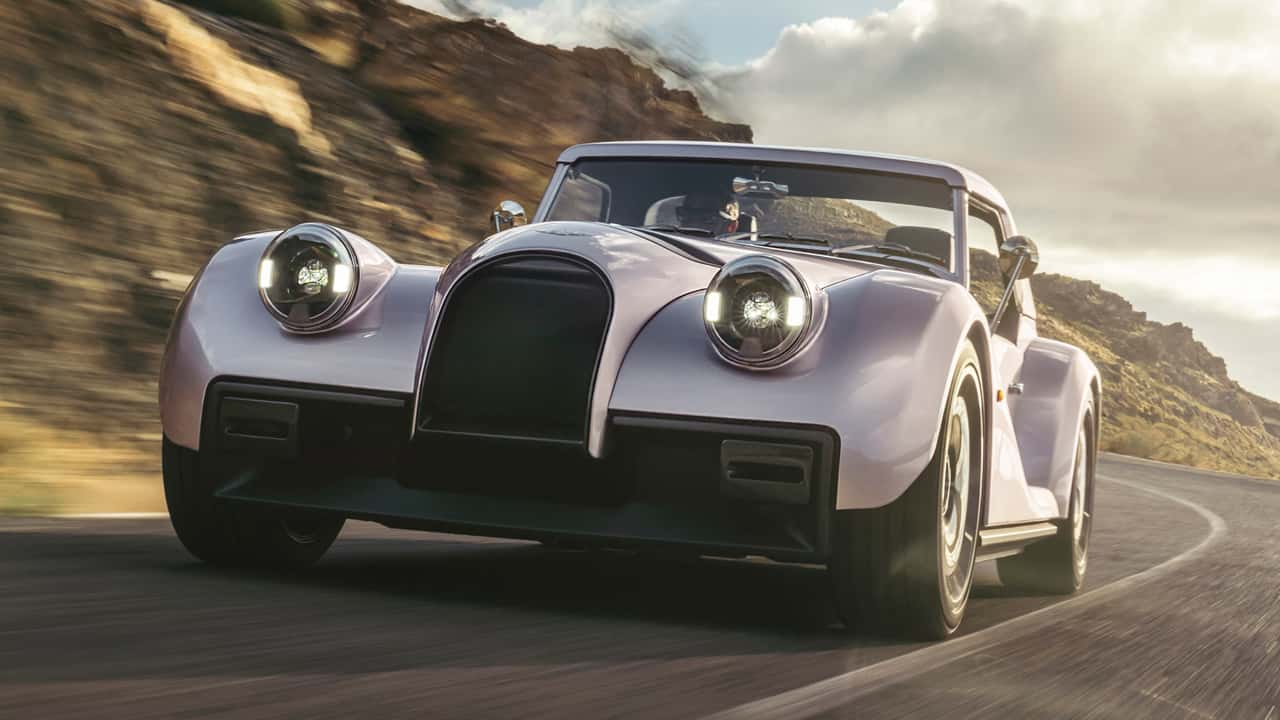
Morgan's Iconic Aero Supersports Touches Down in America, But Without Its Signature V8 Roar
Article summary
For decades, the allure of a Morgan has been a tantalizing, almost forbidden fruit for American enthusiasts. A hand-built, quintessentially British machine, it embodies a driving philosophy distinct from almost anything else on the road. Now, after years of anticipation and navigating the labyrinthine complexities of U.S. automotive regulations, Morgan has achieved a monumental feat: the homologation of its stunning Aero Supersports for the American market. This isn't just another car making its way across the Atlantic; it's a statement, a triumph of bespoke craftsmanship against the tide of mass production. However, this exciting news comes with a bittersweet caveat, one that will undoubtedly spark debate among purists and enthusiasts alike: the Supersports will arrive on American shores without the thunderous BMW N62 V8 that defined its aural and visceral character.
The Aero Supersports, first unveiled in 2009, stands as one of Morgan's most audacious and performance-oriented creations. Built on the revolutionary bonded aluminum chassis – a significant departure from Morgan's traditional ash wood frame – it blended classic lines with thoroughly modern engineering. Its unmistakable silhouette, characterized by the dramatic blister fenders, a boat-tail rear, and a unique targa-style removable roof, made it an instant icon. Powering this magnificent machine was BMW's naturally aspirated 4.8-liter N62 V8, delivering around 367 horsepower. This engine, with its deep, guttural growl and linear power delivery, imbued the Supersports with a raw, engaging personality that perfectly complemented its lightweight construction and direct driving feel. It was a car that didn't just move; it performed a symphony of speed and sound.
The absence of the N62 V8 is, unfortunately, a necessary concession to the realities of modern automotive manufacturing and stringent emissions standards. The N62, while a fantastic engine in its prime, is an older unit that no longer meets the evolving regulatory landscape, particularly in markets like California. While Morgan has not officially confirmed the replacement, all signs point to BMW's highly acclaimed B58 turbocharged 3.0-liter inline-six engine. This engine, already powering the CX-Generation Plus Six and Plus Four models, is a marvel of modern engineering, capable of producing over 335 horsepower in its Morgan application, and significantly more in other BMW models. It's lighter, more fuel-efficient, and boasts impressive torque figures available lower down the rev range, offering a different, yet equally compelling, performance experience.
For many, the transition from a naturally aspirated V8 to a turbocharged inline-six, no matter how brilliant, will represent a significant shift in the Supersports' character. The N62's raw, unadulterated rumble and its crescendo to redline were integral to the car's identity, a visceral connection that few modern engines can replicate. The B58, while incredibly potent and smooth, offers a more refined, albeit still thrilling, soundtrack and power delivery. It’s a trade-off: access to the coveted American market versus preserving every ounce of the original car's specific spirit. Enthusiasts will have to weigh the undeniable benefits of a modern, efficient, and equally quick powerplant against the nostalgic pull of the V8's unique charm.
Bringing a bespoke, low-volume car like the Aero Supersports to the United States is a Herculean task, fraught with regulatory hurdles from crash testing to emissions compliance. Morgan's success in this endeavor is a testament to their dedication and investment in expanding their global footprint. The American market, with its deep appreciation for unique, handcrafted automobiles and a significant pool of discerning collectors, represents an invaluable opportunity for the Malvern-based manufacturer. This homologation isn't just about the Supersports; it potentially paves the way for future CX-Generation models to officially enter the U.S., broadening Morgan's appeal and securing its future in a rapidly evolving industry.
Ultimately, while purists might wince at the thought of a V8-less Supersports, the arrival of this extraordinary machine in America is a cause for celebration. It signifies Morgan's enduring appeal and its ability to adapt without compromising its core philosophy of lightweight, driver-focused performance and unparalleled craftsmanship. The Aero Supersports, regardless of its powerplant, remains a truly special automobile – a rolling sculpture that demands attention and delivers an analog driving experience in an increasingly digital world. Its presence on American roads will undoubtedly turn heads and remind us that some traditions, even when adapted, are worth preserving and experiencing.
OBD2HQ context
This article helps vehicle owners track changes that may affect maintenance cost, safety technology, service access and resale value. It is not a diagnostic procedure; if you have a warning light or symptom, open the matching OBD2 code, vehicle profile or car problem finder.