Spotted: Audi's Secret Weapon – The First-Ever RS Q5 Caught Testing!
Article summary
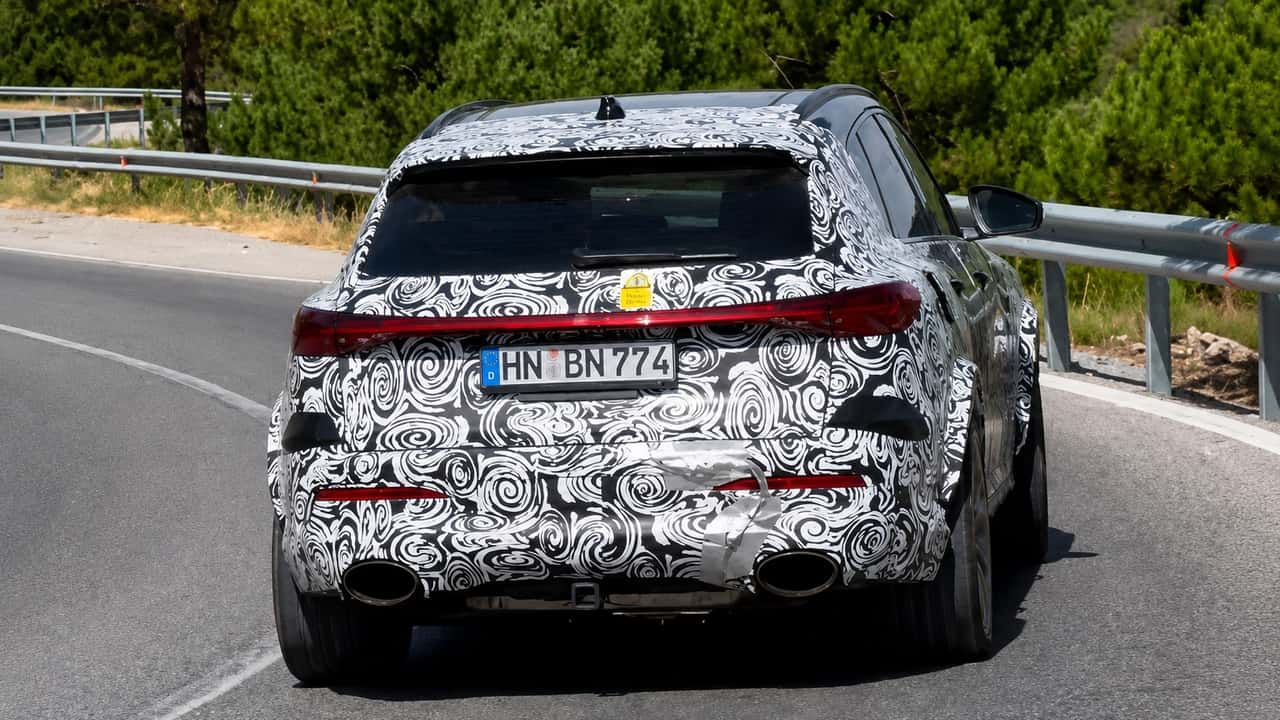
The automotive rumour mill has been churning for years, but now, finally, undeniable visual evidence has emerged: Audi is, indeed, developing an RS Q5. A recent spy video, captured in the wild, has ignited the passion of enthusiasts and sent a clear message to rivals. What we're seeing isn't just another Q5 prototype; it's a beast in the making, adorned with the unmistakable hallmarks of Audi Sport: massively flared wheel arches hinting at a significantly wider track, and perhaps most tellingly, the signature large oval exhaust tips – a clear declaration of full-blown RS pedigree. This isn't the SQ5 we've come to know; this is something far more potent, something Ingolstadt has held back for too long.
For years, the performance mid-size SUV segment has seen fierce competition, with Mercedes-AMG's GLC 63 and BMW's X3 M/X4 M carving out substantial chunks of the market. Audi, despite its formidable RS heritage spanning from the legendary RS2 Avant to the monstrous RS Q8, has curiously left a glaring void in this crucial segment. The SQ5, while a commendable performer with its V6 grunt, has always felt like a warm-up act rather than the main event. This new RS Q5, therefore, represents not just a new model, but a strategic move by Audi to finally enter the fray with a no-compromise contender, ready to challenge the established order and offer a true RS experience to those who desire practicality without sacrificing blistering performance.
Underneath those aggressively sculpted panels, speculation is rife regarding the powertrain. The most probable candidate is Audi's potent 2.9-liter twin-turbocharged V6, a unit already proven in the RS4 Avant and RS5 Coupe. In those applications, it delivers a robust 444 horsepower and 443 lb-ft of torque. However, to truly compete with its rivals, the RS Q5 will likely see an uplift, potentially pushing output closer to the 470-500 horsepower mark, perhaps even incorporating a mild-hybrid system for increased efficiency and a torque boost. Mated to Audi's lightning-quick 8-speed Tiptronic automatic transmission and the legendary Quattro all-wheel-drive system, likely enhanced with a sport differential, this setup promises exhilarating acceleration and tenacious grip, transforming the Q5's refined platform into a genuine tarmac shredder.
Beyond the engine, the RS Q5’s visual cues speak volumes about its dynamic intentions. Expect a drastically redesigned front fascia with gaping air intakes for enhanced cooling, a lower ride height courtesy of an RS-tuned adaptive air suspension system, and beefier brakes peeking through bespoke large-diameter alloy wheels. The wider track, necessitated by the increased power and grip, will undoubtedly contribute to a more aggressive stance and improved cornering stability. Inside, we can anticipate the usual RS treatment: sport seats, unique trim, a flat-bottom steering wheel, and bespoke digital display modes, all designed to immerse the driver in a high-performance environment while retaining Audi's renowned interior quality and technological sophistication.
The timing of the RS Q5's arrival is also significant. As the automotive industry grapples with the shift towards electrification, this new performance SUV could represent one of the last pure internal combustion engine (ICE) RS models before Audi fully embraces hybridisation and battery-electric powertrains for its performance division. It's a statement piece, reaffirming Audi Sport's commitment to exhilarating driving experiences in an era of change. Its success will hinge on striking the perfect balance between everyday usability and track-day capability, a tightrope walk that Audi Sport has historically mastered. We anticipate an official reveal sometime in late 2024 or early 2025, with sales commencing shortly thereafter, making it a 2025 or 2026 model year vehicle. The wait, undoubtedly, will be worth it.
OBD2HQ context
This article helps vehicle owners track changes that may affect maintenance cost, safety technology, service access and resale value. It is not a diagnostic procedure; if you have a warning light or symptom, open the matching OBD2 code, vehicle profile or car problem finder.