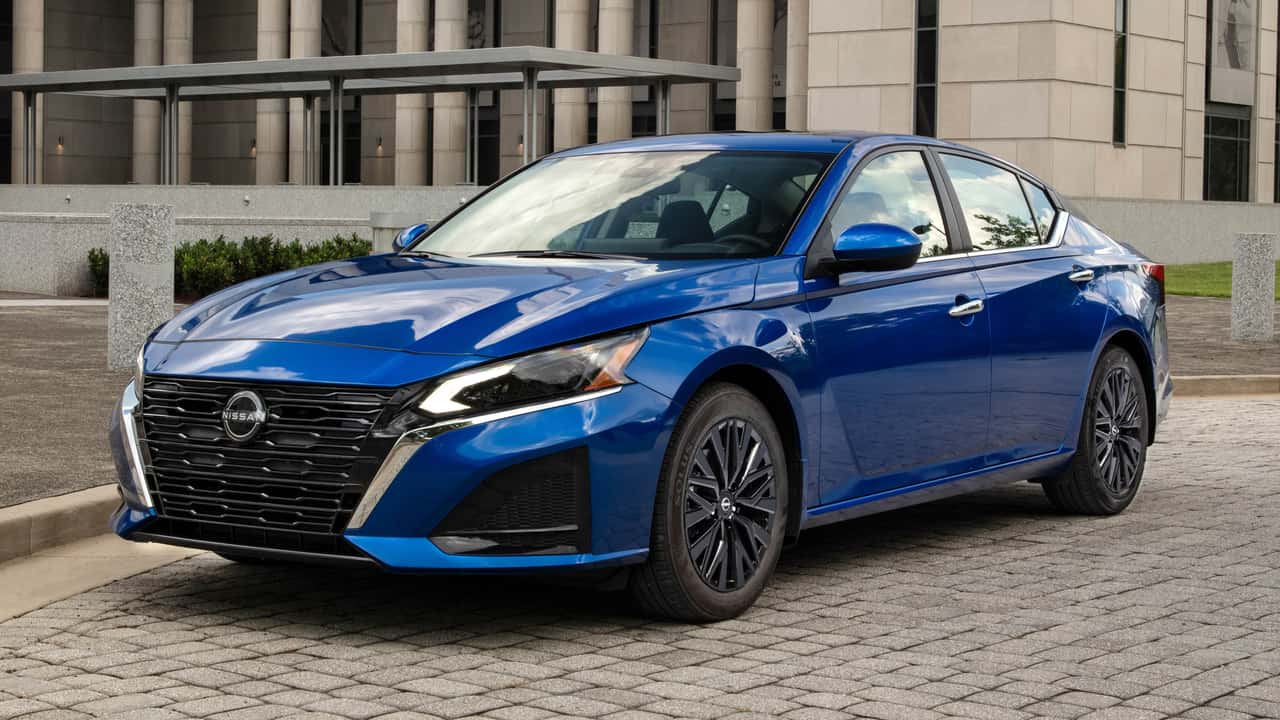
The Nissan Altima Isn't Dead Yet: A Mid-Size Sedan's Unexpected Reprieve
Article summary
The automotive world, ever-hungry for the next big story, had largely written the eulogy for the Nissan Altima. Whispers of its demise grew louder with every passing quarter, fueled by the relentless march of SUVs and Nissan's own strategic "Nissan NEXT" overhaul. Yet, in a twist befitting a dramatic automotive saga, it appears the Altima has received a stay of execution. While many rivals have either exited the mid-size sedan arena or transformed into something barely recognizable, Nissan seems to be doubling down, or at least holding the line, on its stalwart offering, affirming that the Altima is far from ready for the automotive graveyard. This unexpected turn of events signals a nuanced re-evaluation of Nissan's U.S. lineup, suggesting a deeper strategy than mere market trends might dictate.
For decades, the mid-size sedan was the undisputed king of American driveways, a symbol of practicality, affordability, and family-friendly transport. The Altima, alongside titans like the Toyota Camry and Honda Accord, carved out a significant slice of this lucrative pie. Its journey from a compact, sporty alternative in the early '90s to a mainstream volume seller was a testament to its adaptability. However, the 21st century brought a seismic shift: the crossover SUV. Consumers flocked to higher ride heights, perceived utility, and fashionable ruggedness, leaving traditional sedans battling for relevance. Competitors like the Ford Fusion, Chevrolet Malibu, and even the Volkswagen Passat have either vanished or are slated for discontinuation, making the Altima's continued presence a curious anomaly.
So, why the reprieve? Nissan's decision isn't purely sentimental; it's rooted in a pragmatic understanding of market segments often overlooked. The Altima continues to be a strong contender in fleet sales, serving rental car agencies and corporate clients who prioritize value, reliability, and low running costs. Furthermore, in a market saturated with increasingly expensive SUVs, the Altima offers an accessible entry point for buyers seeking a well-equipped, comfortable, and fuel-efficient vehicle without the crossover premium. Its available VC-Turbo engine, offering a compelling blend of power and efficiency, and advanced driver-assistance features like ProPILOT Assist, still provide a competitive edge in its class. Nissan's "Nissan NEXT" plan, while emphasizing electrification and SUVs, also aimed for a rationalized, profitable core lineup, and the Altima clearly still fits that bill for specific demographics.
What does this "not dead yet" status imply for the Altima's future? It's highly probable that Nissan isn't merely treading water. Instead, we could see a strategic evolution. Given the industry's rapid shift, a future Altima could incorporate significant hybridization, perhaps even a fully electric variant down the line, leveraging Nissan's extensive experience with the Leaf and upcoming EV platforms. A design refresh, drawing inspiration from Nissan's bolder new aesthetic seen in models like the Ariya and new Z, could inject much-needed curb appeal. Platform commonality, likely utilizing an evolution of the CMF-CD architecture shared with other Nissan-Renault-Mitsubishi alliance vehicles, would ensure cost-effectiveness while allowing for advanced technology integration. The goal would be to redefine the Altima not just as a survivor, but as a renewed, relevant player.
Nissan's commitment to the Altima sends a clear message: the sedan segment, while diminished, is not entirely obsolete. For consumers, this means continued choice in a category that still offers distinct advantages, such as superior driving dynamics, better fuel economy, and often a more competitive price point compared to similarly sized crossovers. It also underscores Nissan's willingness to cater to a broader spectrum of buyers, not just those chasing the latest SUV trend. As other manufacturers prune their sedan offerings, Nissan stands to gain a larger share of a smaller, but still significant, market. The Altima's resilience could serve as a case study for how traditional segments can adapt and endure in an ever-changing automotive landscape, proving that sometimes, the most strategic move is to zig when everyone else zags.
OBD2HQ context
This article helps vehicle owners track changes that may affect maintenance cost, safety technology, service access and resale value. It is not a diagnostic procedure; if you have a warning light or symptom, open the matching OBD2 code, vehicle profile or car problem finder.