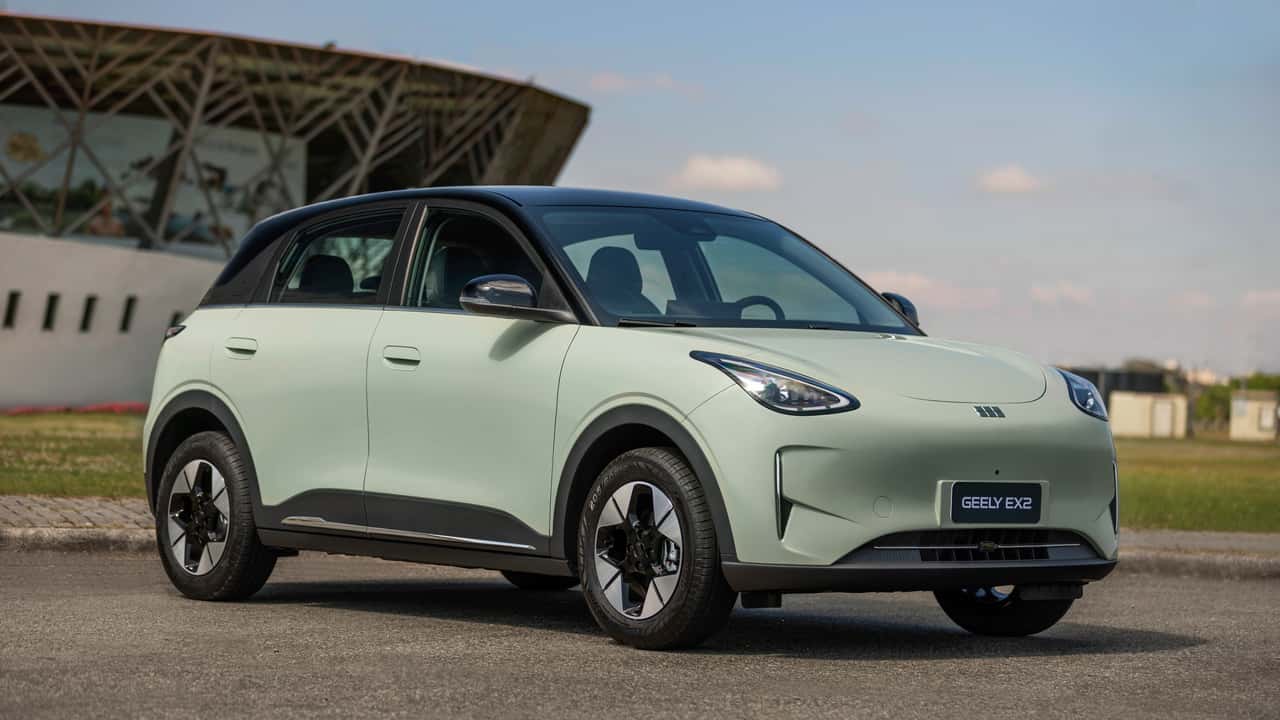
This Tiny Hatchback Is The Best-Selling Car In China. But How?
Article summary
In the bustling, ever-evolving automotive landscape of China, where cutting-edge technology meets unparalleled scale, one might expect the sales charts to be dominated by luxurious electric SUVs or potent performance sedans. Yet, defying every conventional expectation, the crown for China's best-selling car belongs to an unassuming, compact electric hatchback: the Geely E2. This isn't merely a strong performer; it's a phenomenon that has quietly, yet decisively, outsold global titans like the Tesla Model Y, carving out a remarkable niche in the world's largest EV market. Its ascent to the top isn't just a testament to clever marketing or fleeting trends; it's a profound statement about the future of urban mobility and the enduring power of practicality.
So, how does this pint-sized electric marvel achieve such astonishing feats? The answer lies in its surgical precision in addressing the core needs of the Chinese consumer. China's megacities are characterized by dense populations, relentless traffic, and a pressing need for efficient, affordable personal transport. The Geely E2 steps into this arena not with grandiose promises of blistering acceleration or intercontinental range, but with an irresistible proposition: accessible, zero-emission mobility at an unprecedented price point. While exact figures fluctuate, its typical price range positions it firmly in the sweet spot for a vast segment of the population, often making it eligible for generous government subsidies that further sweeten the deal. This affordability, combined with minimal running costs, makes it an undeniable choice for first-time car buyers, urban commuters, and families seeking a second, practical vehicle.
Peel back the layers, and the E2's genius lies in its purposeful simplicity. It's not chasing headline-grabbing performance figures. Instead, it focuses on delivering 'just enough' for its intended purpose. Powered by a modest yet efficient electric motor, the E2 typically offers a city-friendly range, often in the ballpark of 300-400 kilometers (NEDC or CLTC), more than sufficient for daily commutes and urban errands. Its compact footprint, usually around 3.6-3.7 meters in length, makes navigating congested streets and finding parking spots a breeze – a critical advantage in sprawling urban centers. Inside, while not opulent, the cabin is surprisingly well-packaged, offering adequate space for four adults and a decent boot for groceries. Features are practical and intuitive, eschewing unnecessary complexities for user-friendliness, embodying a philosophy of functional design over flashy gimmickry.
The E2’s dominance transcends mere sales statistics; it heralds a significant cultural shift in how personal transportation is perceived and adopted in an electrified era. Much like the original Mini or the Fiat 500 democratized motoring in post-war Europe, or the Kei cars revolutionized urban mobility in Japan, the Geely E2 is doing the same for China's electric revolution. It’s a testament to the idea that an EV doesn't need to be a statement of luxury or performance to be desirable. Instead, it proves that practicality, reliability, and sheer affordability can be the most compelling features of all. It represents a pragmatic approach to electrification, demonstrating that mass adoption can be accelerated by catering to the everyday needs of the masses, rather than solely focusing on the premium segment.
The implications of the E2's success resonate far beyond China's borders. It serves as a potent blueprint for emerging markets globally, many of which share similar urban challenges and consumer demands for accessible, sustainable transport. For established Western automakers, it presents both a challenge and a lesson: the future of electric mobility is diverse, and neglecting the entry-level segment is a strategic oversight. While luxury EVs capture headlines, the true volume and environmental impact will likely come from these humble, efficient city cars. Will we see a global embrace of this 'micro-EV' philosophy, or will local market nuances dictate differing paths? The E2 suggests that the 'people's EV' concept is not just viable, but thriving, and could fundamentally reshape product strategies worldwide.
In a world often fixated on horsepower and luxury badges, the Geely E2 stands as a quiet rebel, proving that innovation isn't always about the biggest or the fastest, but often about the smartest and most accessible. Its reign as China's best-selling car is more than a fleeting market anomaly; it’s a powerful narrative about the democratization of electric mobility. It highlights how a deep understanding of consumer needs, combined with strategic pricing and practical design, can accelerate the global transition to sustainable transport from the ground up. The E2 isn't just a car; it's a symbol of a pragmatic, electrified future, one that truly puts mobility within everyone's reach.
OBD2HQ context
This article helps vehicle owners track changes that may affect maintenance cost, safety technology, service access and resale value. It is not a diagnostic procedure; if you have a warning light or symptom, open the matching OBD2 code, vehicle profile or car problem finder.