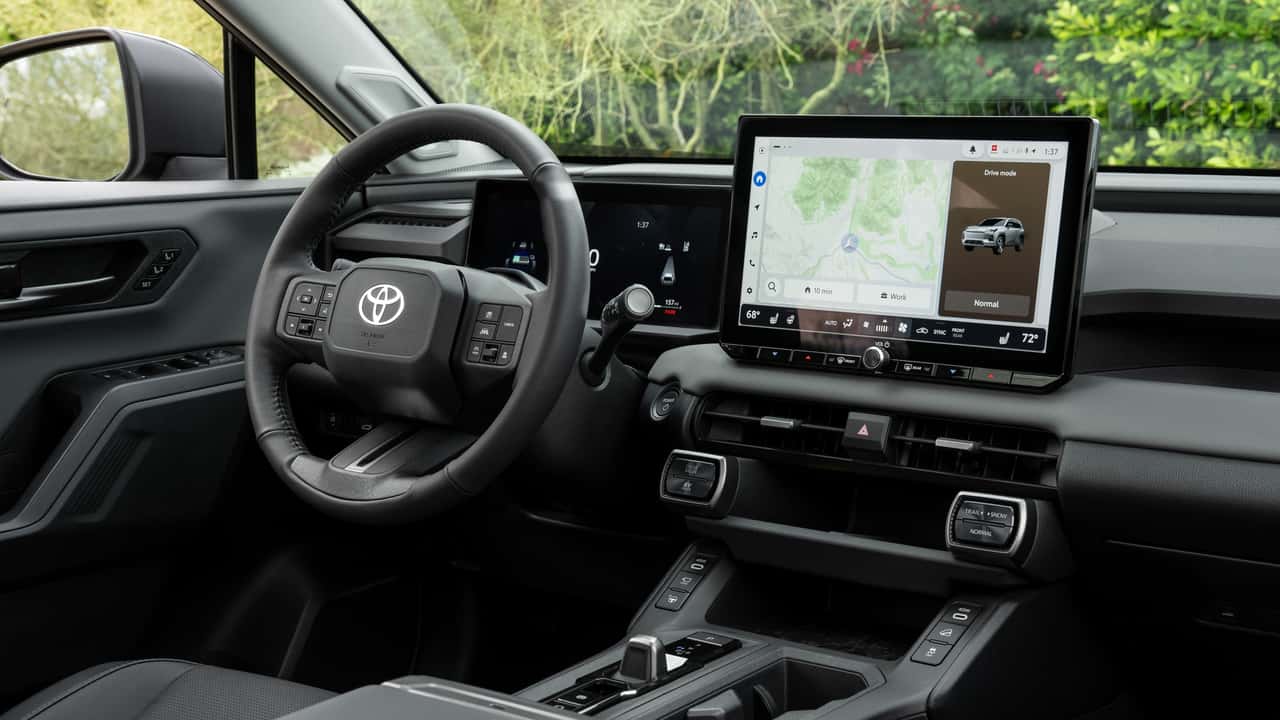
The Tactile Comeback: Toyota Considers Reinstating Physical Buttons in the RAV4
Article summary
In an automotive world increasingly dominated by sleek, minimalist cabins and vast, glowing touchscreens, the humble physical button has become an endangered species. Car manufacturers, in their relentless pursuit of modernity and perceived technological advancement, have often sacrificed tactile feedback and intuitive ergonomics at the altar of digital aesthetics. Toyota, a brand long synonymous with practicality and user-centric design, recently joined this digital migration with its redesigned RAV4 interior, opting for a cleaner, more screen-heavy layout that minimized traditional controls. However, it seems the winds of change might be shifting, as reports indicate Toyota is now actively evaluating customer feedback, hinting at a potential—and welcome—reinstatement of physical buttons in their globally popular compact SUV.
The RAV4’s latest iteration, while undeniably modern in its presentation, saw a significant reduction in the number of dedicated physical controls for functions like climate, audio, and drive modes. The reasoning behind such a move is multifaceted: it simplifies manufacturing, reduces part count, and allows for a more fluid, adaptable interface that can be updated over time. Aesthetically, it creates an uncluttered dashboard, giving the impression of sophistication and cutting-edge technology. For some buyers, especially those accustomed to smartphone interfaces, this transition felt natural. Yet, for a vast majority, particularly the demographic that values the RAV4 for its no-nonsense reliability and ease of use, the shift proved to be a source of frustration.
The core of the issue lies in the fundamental principles of human-machine interaction (HMI) and driving safety. Operating critical vehicle functions via a touchscreen often requires drivers to divert their gaze from the road, navigate through menus, and precisely tap a digital icon, all while the vehicle is in motion. This stands in stark contrast to the instantaneous, eyes-on-the-road operation afforded by physical buttons and dials, which can be manipulated by feel thanks to haptic feedback and muscle memory. Whether it's adjusting the fan speed, changing a radio station, or engaging a heated seat, the difference in cognitive load and reaction time between a physical button and a digital menu can be substantial, impacting both convenience and safety. The feedback Toyota is receiving clearly reflects this real-world user experience.
This isn't an isolated incident; it’s a recurring theme across the industry. Brands like Volkswagen faced similar critiques with their ID. series, eventually conceding to bring back more conventional controls in future models after widespread customer outcry. Mercedes-Benz, too, has been carefully re-evaluating the balance between its expansive MBUX touchscreens and essential physical controls. It highlights a crucial pendulum swing in automotive interior design: the initial rush to digitalize everything is now being tempered by a pragmatic understanding of what truly enhances—rather than detracts from—the driving experience. Brands like Mazda have consistently championed the rotary controller and physical buttons, proving that a balanced approach can indeed be premium and intuitive.
For Toyota, a company that built its reputation on bulletproof reliability and intuitive ergonomics, this customer feedback presents a crucial juncture. The RAV4 is not just another model; it's a global bestseller, a practical workhorse for millions of families and adventurers. Reintroducing physical controls, even partially, would be a significant acknowledgement of customer preference and a testament to Toyota’s commitment to user satisfaction. From an engineering perspective, it involves re-tooling, redesigning console layouts, and integrating new componentry, which can be costly and time-consuming. However, the long-term benefits of improved driver satisfaction, enhanced safety, and a reinforced brand image of user-centric design could far outweigh these initial hurdles.
What might a “button renaissance” look like in the RAV4? It's unlikely to be a wholesale return to yesteryear's crowded dashboards. Instead, we anticipate a thoughtful reintegration: perhaps dedicated dials for climate control, physical buttons for essential audio functions like volume and track skip, and tactile switches for critical safety features. This move would demonstrate a mature understanding of driver needs, blending modern technology with timeless ergonomic principles. It serves as a powerful reminder to the entire automotive industry: while innovation is vital, the ultimate arbiter of good design remains the human behind the wheel. Toyota's potential course correction with the RAV4 could set a new standard for balancing digital flair with indispensable practicality.
OBD2HQ context
This article helps vehicle owners track changes that may affect maintenance cost, safety technology, service access and resale value. It is not a diagnostic procedure; if you have a warning light or symptom, open the matching OBD2 code, vehicle profile or car problem finder.