Volkswagen's Secret Beast: The Amarok-Based SUV That Almost Was – And Could Be Again
Article summary
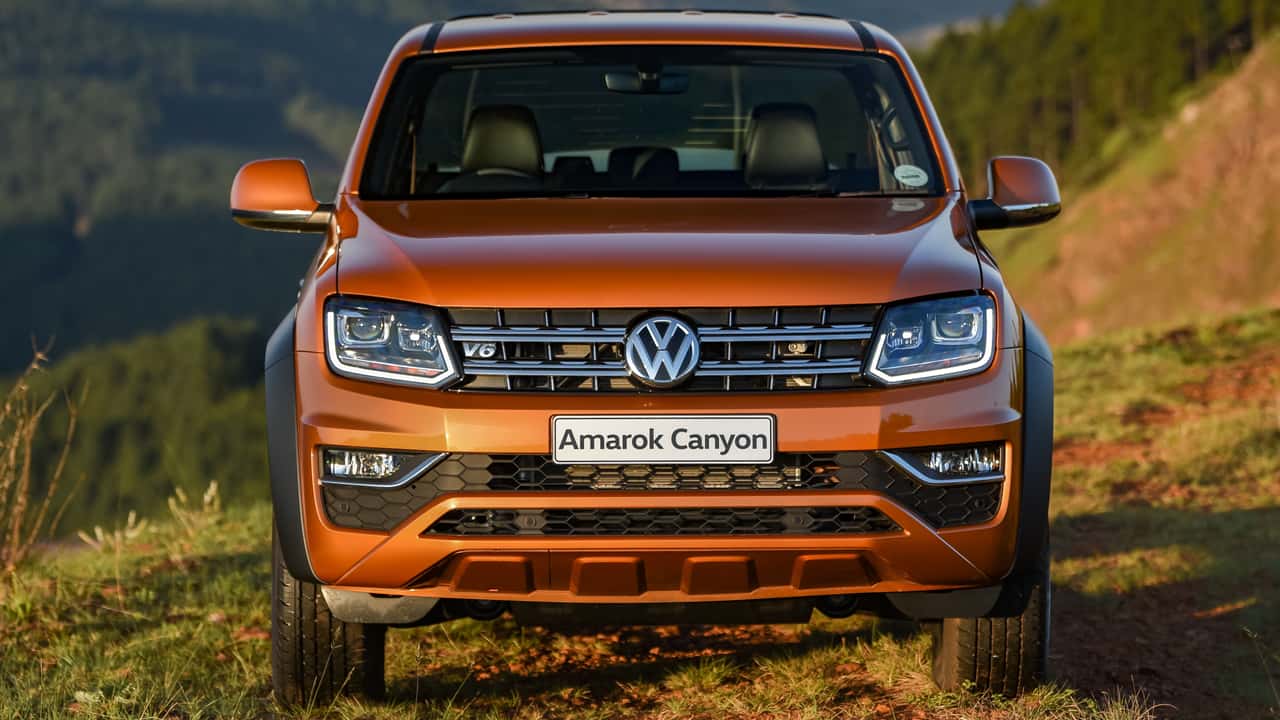
Imagine a Volkswagen that could truly tackle the wilderness with the unyielding spirit of a workhorse, yet coddle seven occupants in typical Wolfsburg comfort. It turns out, this wasn't just a fantasy; it was a deeply guarded secret project. For years, whispers circulated, but now the truth is out: Volkswagen secretly developed a full-blown, truck-based SUV, leveraging the robust underpinnings of its venerable Amarok pickup. This isn't some crossover attempting to look tough; this was a body-on-frame beast, designed from the ground up to conquer.
The significance of "body-on-frame" construction cannot be overstated when discussing true off-road capability. Unlike the unibody architecture prevalent in most modern SUVs – including VW's own Touareg and Atlas – a body-on-frame design separates the chassis from the body. This provides immense structural rigidity, superior resistance to torsional flex under extreme conditions, and a higher tolerance for heavy loads and towing. The Amarok, especially in its first generation, was celebrated for its rugged durability, impressive payload capacity, and surprisingly refined on-road manners for a pickup. Transplanting this DNA into a seven-seat SUV would have created a formidable machine, capable of tackling everything from remote job sites to challenging family adventures far beyond the paved path. This would have placed it squarely against established rivals like the Ford Everest (based on the Ranger) and Toyota Fortuner (based on the Hilux).
Volkswagen's current SUV portfolio is comprehensive, ranging from the compact T-Cross to the luxurious Touareg and family-friendly Atlas/Teramont. However, none truly embody the hardcore, go-anywhere spirit of a traditional truck-based SUV. The Amarok-based concept would have filled a crucial void, offering genuine ruggedness and utility that even the Touareg, despite its impressive off-road packages, couldn't match due to its unibody construction. Historically, VW has dabbled in robust vehicles – think of the original Iltis military vehicle or even the early, more utilitarian Touareg. This Amarok SUV project suggests a pragmatic acknowledgment of the global demand for such vehicles, particularly in markets like South America, Australia, and parts of Asia and Africa where pickups and their SUV derivatives reign supreme as versatile family haulers and adventure machines.
So, if the concept was so compelling, why did it remain a phantom? The reasons are likely multi-faceted. One significant hurdle could have been market segmentation; a robust, seven-seat SUV might have been perceived as cannibalizing sales from the premium Touareg or the family-oriented Atlas/Teramont, despite serving a different customer base. Development costs for a relatively niche product, especially when VW was heavily investing in its electric vehicle future and adapting to increasingly stringent global emissions regulations, could also have been a deterrent. Furthermore, there's the question of brand image. While the Amarok successfully carved out a niche as a premium pickup, extending that ruggedness to a full-size SUV might have been seen as diluting Volkswagen's increasingly sophisticated and aspirational passenger car brand identity in core European and North American markets.
Fast forward to today, and the landscape has shifted dramatically. The global appetite for rugged, off-road capable SUVs is stronger than ever, with vehicles like the Ford Bronco, Jeep Wrangler, and Land Rover Defender enjoying immense popularity. Crucially, the second-generation Amarok is now built on the same T6.2 platform as the Ford Ranger and its SUV sibling, the Everest. This strategic partnership with Ford significantly reduces the financial and engineering burden of developing a new body-on-frame SUV. With shared platforms, powertrains, and even manufacturing facilities, the path to a Volkswagen-badged Amarok SUV is clearer and more cost-effective than ever before. It's a tantalizing prospect for enthusiasts and families alike, particularly in regions where such vehicles are a staple of daily life and weekend adventures.
The revelation of Volkswagen's secret Amarok-based SUV is a fascinating glimpse into what could have been. It speaks to a bolder, more adventurous side of the German automaker, one willing to explore beyond its conventional passenger car and crossover comfort zones. While the original project may have been shelved, the stars seem to be aligning for its spiritual successor. The market demands it, the technology exists, and a powerful partnership is already in place. Here's hoping Volkswagen takes another look at this formidable concept, bringing a truly rugged, seven-seat SUV to the global stage – a vehicle that would undoubtedly uphold the brand's reputation for quality while unleashing an untamed spirit.
OBD2HQ context
This article helps vehicle owners track changes that may affect maintenance cost, safety technology, service access and resale value. It is not a diagnostic procedure; if you have a warning light or symptom, open the matching OBD2 code, vehicle profile or car problem finder.