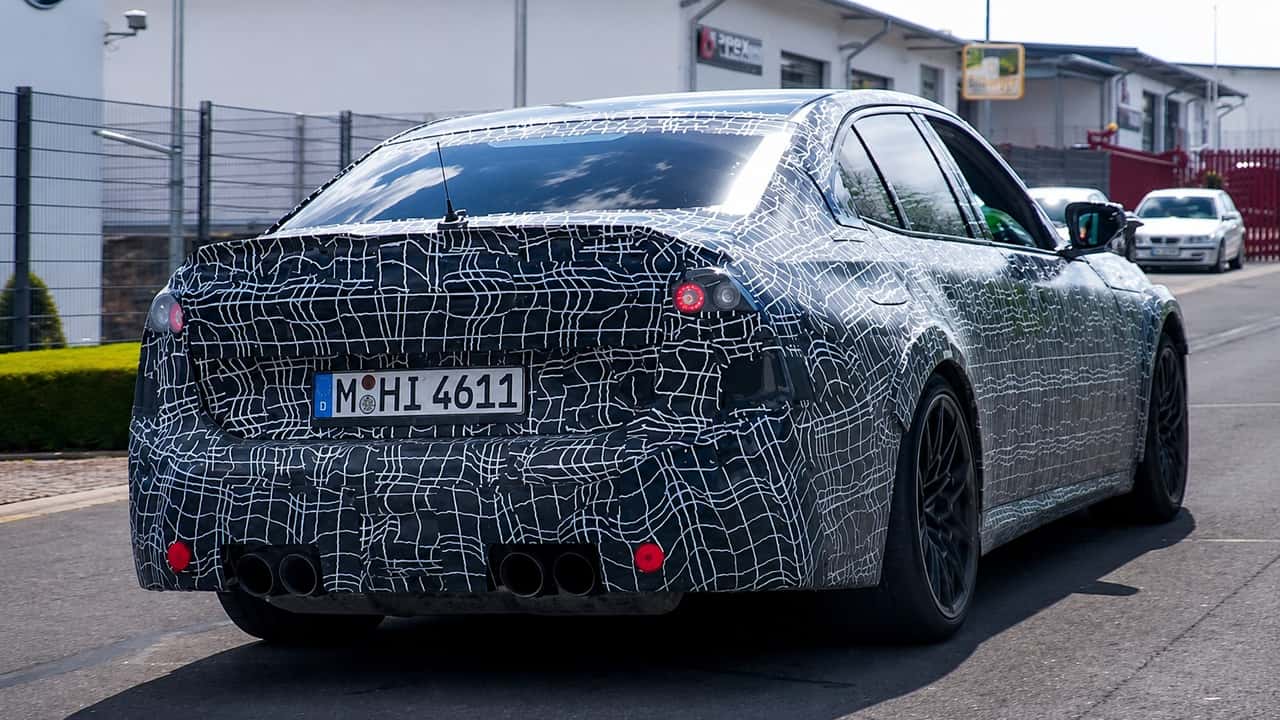
Volume Up: BMW Is Already Testing The Next M3 With An Inline-Six, Preserving A Sacred Roar
Article summary
The automotive world has a peculiar way of holding its breath, and few vehicles command that collective anticipation quite like the BMW M3. For decades, this moniker has represented the ultimate fusion of everyday usability and track-honed performance, a benchmark by which all other sports sedans are measured. So, when news breaks that BMW M engineers are already deep into the development of the next-generation M3, the collective heart rate of enthusiasts around the globe instantly quickens. And the most vital, soul-stirring detail has emerged from the testing grounds: the future of the M3 will continue to be powered by its hallowed inline-six engine. Though still a couple of years away from its official unveiling, these early sightings confirm that BMW is meticulously crafting its next masterpiece, ensuring its roar remains distinct in an evolving automotive landscape.
At the very heart of the M3's enduring appeal lies its engine – and for many, that means an inline-six. It's a configuration BMW has perfected over generations, known for its inherent balance, turbine-smooth power delivery, and an exhaust note that’s pure automotive symphony. The current S58 twin-turbocharged inline-six, found in the G80 M3, is already a marvel, pumping out up to 503 horsepower in Competition guise. The confirmation that its successor will retain this architecture is a massive sigh of relief for purists. While specifics remain under wraps, we can expect an evolution of this already potent powerplant, likely pushing boundaries further in terms of efficiency, response, and, inevitably, power output. BMW's engineers will undoubtedly refine every aspect, from turbocharging characteristics to fuel injection and cooling, to ensure the next inline-six sets new benchmarks for the segment.
Catching a prototype M3 in its early testing phase, cloaked in heavy camouflage, is like glimpsing a titan in its embryonic form. These initial road trials are crucial, not just for validating the powertrain, but for integrating every component into a cohesive, high-performance machine. Engineers will be meticulously evaluating chassis rigidity, suspension tuning, braking performance under extreme conditions, and the intricate dance between engine, transmission, and differential. The "couple of years away" timeline underscores the depth of this development cycle, suggesting a holistic approach to ensuring the next M3 doesn't just boast impressive numbers but delivers an unparalleled driving experience. Every corner, every straight, every brake application on the Nürburgring or public roads will contribute to shaping the car's ultimate character.
This commitment to the internal combustion engine is particularly noteworthy in a market increasingly leaning towards electrification. While competitors like the Mercedes-AMG C63 have embraced hybrid V8s or even hybridized four-cylinders, BMW M appears to be doubling down on its signature formula, at least for this next generation. This strategic decision showcases a keen understanding of its loyal customer base, many of whom cherish the raw, unadulterated sensation of a high-revving petrol engine. It also positions the M3 as a potential "last hurrah" for pure ICE performance in its class, making its eventual arrival even more significant. The challenge will be to meet ever-tightening emissions regulations while delivering the power and emotion M3 owners expect, a tightrope walk BMW M has historically mastered with aplomb.
The M3's lineage is one of continuous innovation rooted in a steadfast philosophy. From the motorsport-bred E30 to the technologically advanced G80, each generation has pushed boundaries while staying true to its performance sedan ethos. The upcoming M3, internally speculated as the G84 (or G87 for the potential Coupe variant), is poised to continue this legacy. While the inline-six is confirmed, we can also anticipate a further refined chassis, potentially incorporating advanced materials for weight reduction, and cutting-edge driver assistance systems seamlessly integrated into the M driving experience. Design-wise, expect an evolution of BMW's current aggressive aesthetic, likely with a focus on aerodynamic efficiency and an even more purposeful stance. This isn't just a car; it's a statement about the enduring appeal of driving purity.
For enthusiasts, the waiting game has officially begun. The knowledge that the next M3 will retain its cherished inline-six provides a comforting anchor in a sea of automotive change. It reassures us that the spirit of the M3 – that intoxicating blend of power, precision, and visceral engagement – will live on. As the camouflage slowly peels away over the coming months and years, revealing more of its form and capabilities, the excitement will only build. Until then, we can rest assured that somewhere, on a secluded test track or a winding mountain pass, BMW M engineers are meticulously sculpting the next legend, ensuring its volume is turned all the way up.
OBD2HQ context
This article helps vehicle owners track changes that may affect maintenance cost, safety technology, service access and resale value. It is not a diagnostic procedure; if you have a warning light or symptom, open the matching OBD2 code, vehicle profile or car problem finder.