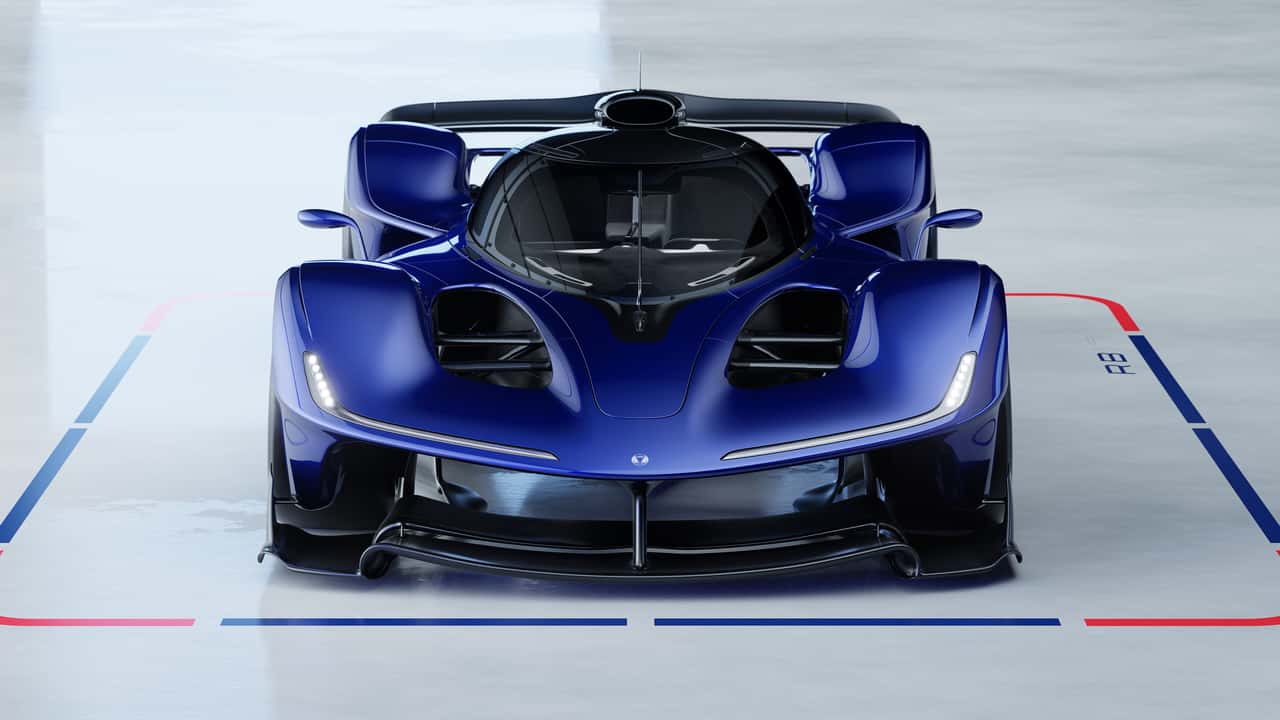
Why Red Bull's RB17 Hypercar Absolutely Had to Scream with a V10 Heartbeat
Article summary
The automotive world watches with bated breath as Red Bull Advanced Technologies, under the visionary guidance of Adrian Newey, unleashes its first standalone hypercar: the RB17. This isn't just another limited-edition track weapon; it's a profound statement, a distillation of Formula 1 prowess into a machine designed for the most discerning and daring enthusiasts. While many expected a cutting-edge hybrid V8 or even a sophisticated V12, Red Bull, in collaboration with legendary engine builders Cosworth, made a truly audacious choice: a screaming, naturally aspirated V10. This decision, as Cosworth's Commercial Director Chris Willoughby revealed in a recent interview, wasn't merely a nod to nostalgia but a deeply considered engineering and philosophical imperative.
The V10 engine, a configuration etched into the annals of motorsport history, particularly the golden era of Formula 1 from the mid-90s to the mid-2000s, presents a unique blend of characteristics perfectly suited for the RB17's uncompromising mission. Willoughby explained that the V10 offers an unparalleled balance of power, torque delivery, and, crucially, an auditory symphony that modern engines often struggle to replicate. Unlike a V8, a V10 can rev higher with less internal friction and vibration, allowing for a broader powerband and a more linear, predictable throttle response – vital for a car pushing the limits of grip and driver skill. Its inherent balance and the unique firing order contribute to that distinctive, spine-tingling shriek that defined a generation of F1 cars, a sound Red Bull clearly wants to resurrect for its track-only monster.
In a hypercar landscape increasingly dominated by complex hybrid powertrains and smaller, forced-induction engines chasing efficiency and road legality, the RB17's V10 stands as a defiant, purist's declaration. This choice resonates deeply with enthusiasts who yearn for the raw, unadulterated mechanical connection of a bygone era. Adrian Newey's design philosophy has always leaned towards elegance and efficiency in aerodynamics and chassis dynamics, but for the powertrain, the emphasis shifts to visceral engagement. Opting for a V10 allows Cosworth to focus purely on performance, responsiveness, and durability without the myriad compromises imposed by road emissions regulations or the added weight and complexity of a full hybrid system. It’s a deliberate pivot away from the current trend, cementing the RB17’s status as a machine built for the purest form of driving exhilaration, reminiscent of the legendary McLaren F1 or Ferrari F50, but with modern F1 technology underpinning its every component.
Crafting a modern V10 for a hypercar like the RB17 is far from a simple exercise in retro engineering. Cosworth, with its unparalleled heritage in high-performance engines, is tasked with pushing the boundaries of what a naturally aspirated V10 can achieve. We can expect this engine to boast astronomical specific output, likely exceeding 1,000 horsepower from its displacement, revving well past 10,000 rpm. The engineering challenges involve advanced materials for lightweight components, sophisticated lubrication and cooling systems to manage extreme thermal loads, and precision manufacturing to ensure reliability under sustained track abuse. The absence of road-going constraints truly liberates the engineers, allowing them to optimize every aspect for peak performance, from intake runner length to exhaust manifold design, ensuring that every horsepower is delivered with brutal efficiency and an intoxicating soundtrack.
Imagine for a moment, strapped into the carbon-fiber cocoon of the RB17, the engine roaring to life behind you. The immediate, unlagged surge of power from a naturally aspirated V10 is a sensation unlike any other. There's no waiting for turbos to spool, no complex algorithms blending electric and combustion power – just a direct, unfiltered connection between your right foot and the engine's explosive output. This visceral experience is precisely what Red Bull and Cosworth are aiming for. The RB17 isn't just a fast car; it's an immersive, almost brutal symphony of speed, sound, and G-forces. It embodies Red Bull's "gives you wings" ethos not just through its aerodynamic wizardry but through a powerplant that screams pure, unadulterated passion for performance, demanding every ounce of a driver's skill and rewarding them with an unforgettable, primal thrill.
The decision to equip the Red Bull RB17 with a Cosworth V10 is more than just an engine choice; it's a defiant statement in an evolving automotive landscape. It’s a bold declaration that ultimate performance and emotional engagement can still be achieved through pure, high-revving internal combustion, especially when unburdened by road regulations. Chris Willoughby's insights underscore a commitment to engineering excellence and an understanding of what truly stirs the soul of a car enthusiast. The RB17, with its V10 heart, is poised to become a legendary machine, not just for its speed and advanced aerodynamics, but for its courageous embrace of a powertrain philosophy that prioritizes raw, unadulterated driving pleasure above all else. It's a testament to the enduring allure of a perfectly engineered, naturally aspirated engine, reminding us why some sounds simply cannot be replicated.
OBD2HQ context
This article helps vehicle owners track changes that may affect maintenance cost, safety technology, service access and resale value. It is not a diagnostic procedure; if you have a warning light or symptom, open the matching OBD2 code, vehicle profile or car problem finder.