The Hidden Genius: Why Your Gas Station Has Three Fuel Grades But Only Two Lines
Article summary
Every visit to the gas station presents a familiar choice: Regular, Mid-Grade, and Premium. We see the three distinct buttons, implying three separate products, three dedicated tanks, and three individual pipelines leading to the dispenser. Yet, a closer inspection, or perhaps a moment of idle curiosity, might lead one to wonder: how do these stations manage to offer three different octane ratings when many only appear to have two main fuel lines running underground? It’s a subtle observation that unveils a surprisingly elegant and efficient piece of engineering, a silent testament to the ingenuity that powers our daily commutes.
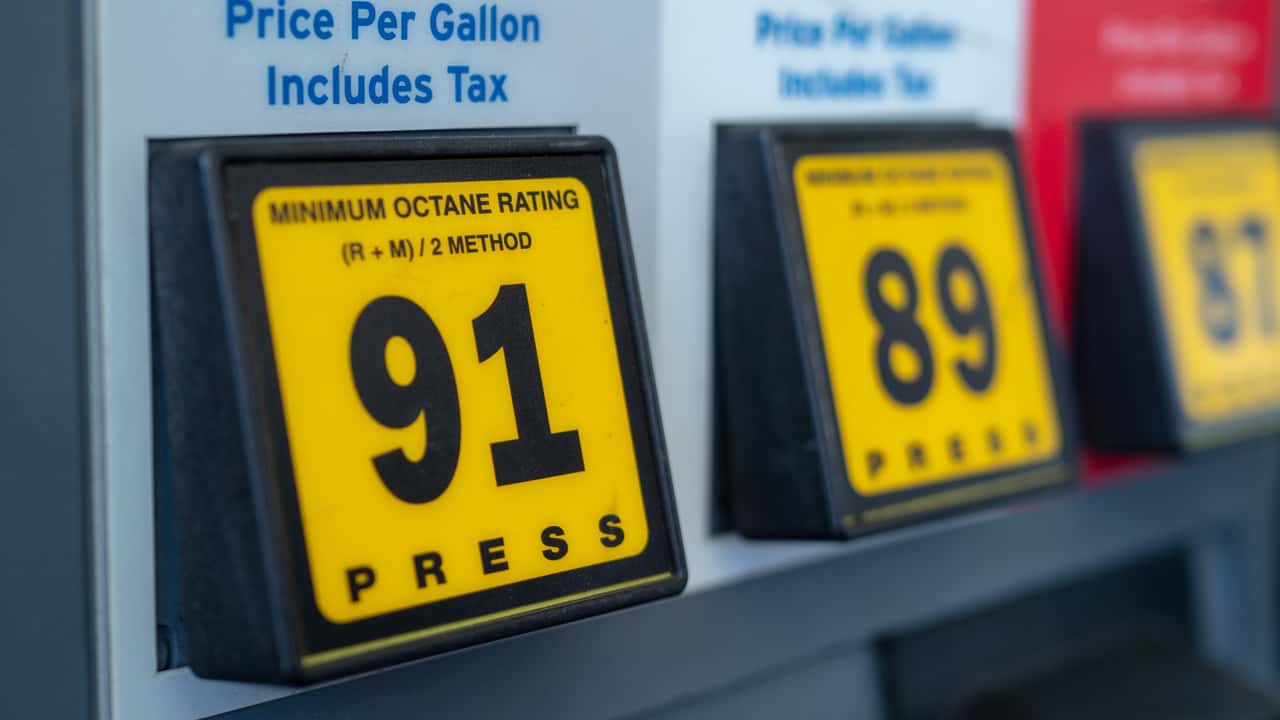
The answer, dear petrolhead, lies in a clever technique known as "on-demand blending" or "proportionate mixing." Most gas stations don't actually store three distinct grades of fuel. Instead, they typically maintain just two primary underground tanks: one for the lowest octane fuel (e.g., 87 AKI Regular) and another for the highest octane fuel (e.g., 91 or 93 AKI Premium). When you select the mid-grade option – say, 89 AKI – the pump doesn't draw from a dedicated 89-octane tank. Instead, it precisely blends a predetermined ratio of the regular and premium fuels *at the pump itself* as it dispenses into your vehicle. It's a marvel of fluid dynamics and control systems operating seamlessly and invisibly.
Delving deeper into the technicalities, the Anti-Knock Index (AKI), often displayed as (R+M)/2, represents a fuel's resistance to pre-ignition or "knocking" in an engine. Higher octane fuels are designed for engines with higher compression ratios or forced induction (turbochargers, superchargers) that are more susceptible to knocking. The blending process is remarkably precise. For instance, to achieve an 89 AKI mid-grade from 87 AKI regular and 91 AKI premium, the dispenser's internal computer calculates the exact volumetric proportion required – often a 50/50 mix, or sometimes slightly adjusted depending on the base octane levels. This real-time mixing not only simplifies the station's infrastructure but also significantly reduces inventory management complexity and costs, as there's no need to monitor and refill a third, slower-moving mid-grade tank.
Historically, older stations might indeed have had dedicated tanks for each grade, leading to more complex underground plumbing and greater upfront investment. However, as fuel dispenser technology advanced through the latter half of the 20th century, the integration of sophisticated blending valves and microprocessors made on-demand mixing both reliable and economically viable. This evolution mirrors the broader automotive industry's drive for efficiency and optimization. From an engineering standpoint, it's a testament to how intelligent design can streamline operations without compromising consumer choice or fuel quality, ensuring that the precise octane your engine demands is delivered with unwavering consistency.
From a market perspective, this blending strategy is a win-win for station owners and, arguably, for consumers. For stations, it translates to fewer storage tanks, less excavation, reduced maintenance, and simpler logistics. For consumers, it means the desired mid-grade is always fresh and readily available, without the risk of a dedicated tank running low or stagnating. However, it also subtly contributes to a common misconception: that mid-grade fuel is somehow inherently "better" or a compromise for engines that "deserve" more than regular but don't quite need premium. In reality, unless your vehicle manufacturer specifically recommends or requires a higher octane fuel, pouring anything above regular is usually a waste of money, offering no performance benefit or increased longevity for most modern engines designed to run optimally on 87 AKI.
So, the next time you pull up to the pump and marvel at the choice of three grades, take a moment to appreciate the unseen mechanical ballet unfolding beneath your feet. It's a brilliant, understated piece of engineering that exemplifies how intelligent design can simplify complex operations, optimize resources, and provide seamless service. It’s a system designed for efficiency, precision, and economic sense, ensuring that whether you opt for regular, premium, or the cleverly concocted mid-grade, your vehicle receives exactly what it needs, thanks to a little bit of hidden genius at work.
OBD2HQ context
This article helps vehicle owners track changes that may affect maintenance cost, safety technology, service access and resale value. It is not a diagnostic procedure; if you have a warning light or symptom, open the matching OBD2 code, vehicle profile or car problem finder.